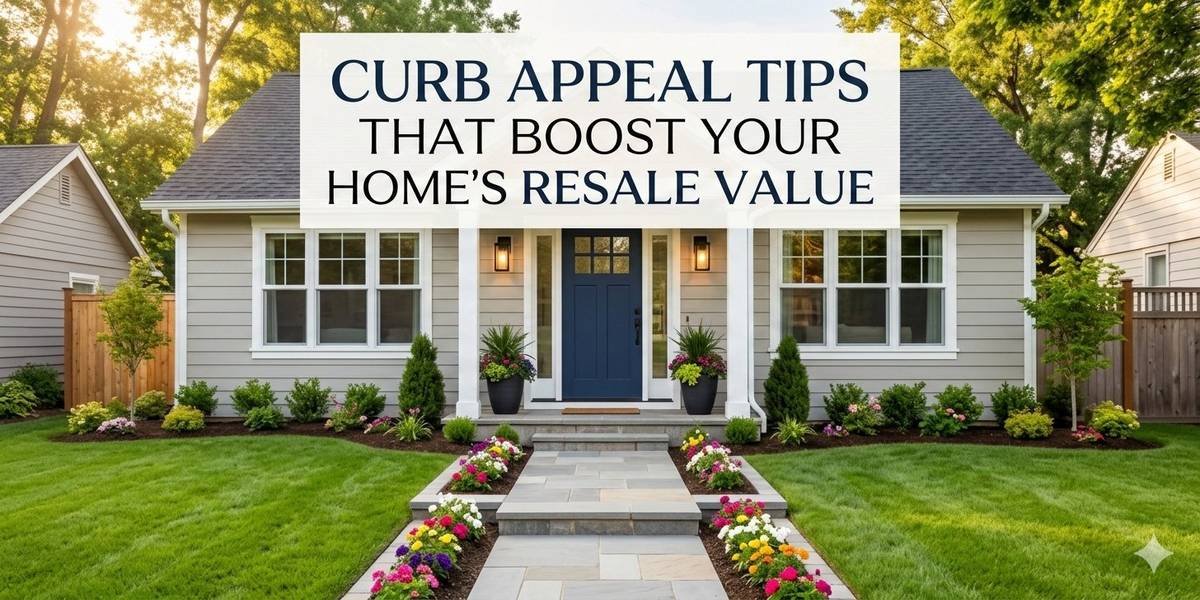
Imagine pulling up to a house where the grass is waist-high, the gutters are sagging like tired eyelids, and the front door hasn’t seen a paintbrush since the nineties. Your stomach drops, right? You haven’t even seen the kitchen, but you’re already mentally knocking $20,000 off the asking price. That’s the brutal reality of curb appeal. It is the silent handshake of real estate. For mortgage professionals and insurance execs, this isn’t just about pretty flowers. It’s about asset valuation and risk. In this guide, we’ll break down why the outside of a home dictates the financial fate of the inside. We’ll look at the “Neighbor Effect,” surprising ROI stats, and why an appraiser cares about your lawn more than you think.
Why First Impressions Carry Real Dollar Value
Buyers make up their minds about a house in about 90 seconds. Most of that time is spent walking from the car to the front door. If the exterior looks neglected, the buyer assumes the “invisible” parts of the house—like the plumbing or the furnace—are also falling apart.
According to the National Association of Realtors (NAR) 2023 Remodeling Impact Report, 92% of Realtors suggest leveling up the exterior before selling. It pays off. High curb appeal can increase a home’s sales price by an average of 7%. On a $400,000 home, that’s an extra $28,000. In slower markets, that premium can actually jump to 14% (Source: University of Alabama/UT Arlington study).
The Psychology of Maintenance
There is a concept in psychology called “Heuristic Bias.” It’s a mental shortcut. When an appraiser or a buyer sees a perfectly edged lawn, their brain tells them, “This owner is responsible.” They assume the roof is solid and the wiring is safe. Conversely, a cracked driveway sends a signal of “deferred maintenance.” This leads to lower offers and tougher inspections.
What Mortgage Appraisers and Insurers Actually Notice
Many homeowners think appraisers only care about square footage and the number of bathrooms. Wrong. The exterior condition is a massive part of the formal Uniform Residential Appraisal Report (URAR).
The Impact on Loan-to-Value (LTV)
If an appraiser notes that the exterior is in “Fair” or “Poor” condition, it drags down the total appraised value. For a mortgage lender, this is a red flag. If the value comes in low, the Loan-to-Value ratio shifts. The buyer might suddenly need a larger down payment to bridge the gap. In some cases, the deal just dies on the vine.
Insurance Risk Factors
For the corporate insurance side, a messy exterior isn’t just ugly. It’s a liability.
- Overhanging Trees: Limbs touching the roof are a highway for rodents and a major fire risk.
- Cracked Walkways: These are “trip-and-fall” hazards. An insurer might see a broken sidewalk and see a future lawsuit.
- Moss on Roofs: This usually means the shingles are holding moisture. It’s a sign that a roof failure is coming soon.
Top Curb Appeal Upgrades with High Returns
Not all projects are created equal. If you have $5,000 to spend, you need to know where it works hardest.
The Power of the Garage Door
Wait, the garage door? Yes. While the front door gets the glory, the garage door often takes up 30% of the front of the house. According to Remodeling Magazine’s 2024 Cost vs. Value report, replacing a garage door has an ROI of roughly 194%. It almost doubles your money. It’s a huge mechanical and visual upgrade that buyers love.
The Front Door Refresh
If the garage door is too pricey, look at the entry door. A fresh coat of paint in a bold color—like navy blue or deep charcoal—costs maybe $100. This tiny move can return up to 150% of its cost. If the door is dented or old, replace it with a steel version. Steel doors are now recouping over 100% of their cost because they scream “security” and “energy efficiency.”
Professional Landscaping vs. Simple Care
You don’t need a fountain or a stone statue. Honestly, simple is better. Research from Virginia Tech found that moving from “minimal” to “sophisticated” landscaping can boost property value by 10% to 12%.
- The 217% ROI: The NAR found that standard lawn care (fertilizing and weed control) has a 217% return on investment. That is the highest of any outdoor project.
- Mulch: It’s cheap. It smells like a new house. It makes garden beds look finished instantly.
The “Neighbor Effect” in Real Estate
Here is a weird fact: your home value isn’t just about you. It’s about the guy next door, too. The “Neighbor Effect” is a real thing in real estate economics. A study by UT Arlington found that the curb appeal of the properties immediately adjacent to yours accounts for about one-third of your home’s premium.
If your neighbor’s yard looks like a junkyard, it actively drains money from your pocket. This is why many corporate relocation experts suggest helping a neighbor mow their lawn or offering to trim their hedge before you list your own home for sale. It’s not just being nice. It’s protecting your assets.
Small Details That People Often Miss
Buyers have “eagle eyes” for neglect. When they see small things broken, they start wondering what else is wrong. Check these off your list:
- House Numbers: Swap those old, brass numbers for something modern and high-contrast.
- Lighting: Rusting light fixtures look cheap. Spend $80 on a matte black lantern style.
- The Mailbox: If it’s leaning or faded, replace it. It’s the first thing the mail carrier—and the buyer—sees.
- Pressure Washing: This is the magic wand of home sales. Wash the siding, the driveway, and the fence. It removes ten years of “gray” from the property in two hours.
Budget Breakdown for Exterior Improvements
If you are on a tight budget, prioritize the items with the highest ROI. Use this table as a quick reference guide for your next project.
| Project | Estimated Cost | Potential ROI |
| Standard Lawn Care | $100–$250 | 217% |
| Garage Door Replacement | $2,000–$4,000 | 194% |
| Steel Entry Door | $1,500–$2,500 | 100% – 188% |
| Full Exterior Paint (DIY) | $500–$1,000 | 50% – 100% |
| Mulch and Flower Planting | $150–$300 | High (Speeds up sale) |
| New House Numbers/Lights | $100–$200 | Perceived Quality Boost |
Advanced Concepts for Professionals
For those in the mortgage or insurance world, understanding these exterior factors helps in risk assessment. A property with poor exterior “bones” is more likely to have “hidden” insurance claims later.
Look at the grading of the land. Does the dirt slope toward the house? That’s a foundation and flood risk. Are there cracks in the chimney? That’s a fire hazard and a structural red flag. By training your eye to see past the “pretty” parts of curb appeal, you can better judge the actual safety and longevity of the investment.
Wrapping It Up
At the end of the day, curb appeal is about pride of ownership. It is the most effective way to tell the world that a home is worth every penny of the asking price. Whether it’s a $200 pressure washing job or a $3,000 garage door, these upgrades pay for themselves. They make the appraiser’s job easier, the insurer’s risk lower, and the buyer’s decision faster.
For students and pros, remember this: the exterior is a proxy for the interior. If the outside looks like a million bucks, people will believe the inside is, too. Don’t leave money on the sidewalk. Start with the lawn, fix the door, and watch the value of the property climb.